
Workplace Transformations


451 Lives, 24 Months, One Factory Transformed
How a Leading Automobile Manufacturer Turned Its Most Disengaged Workers into Its Biggest Proof of Change
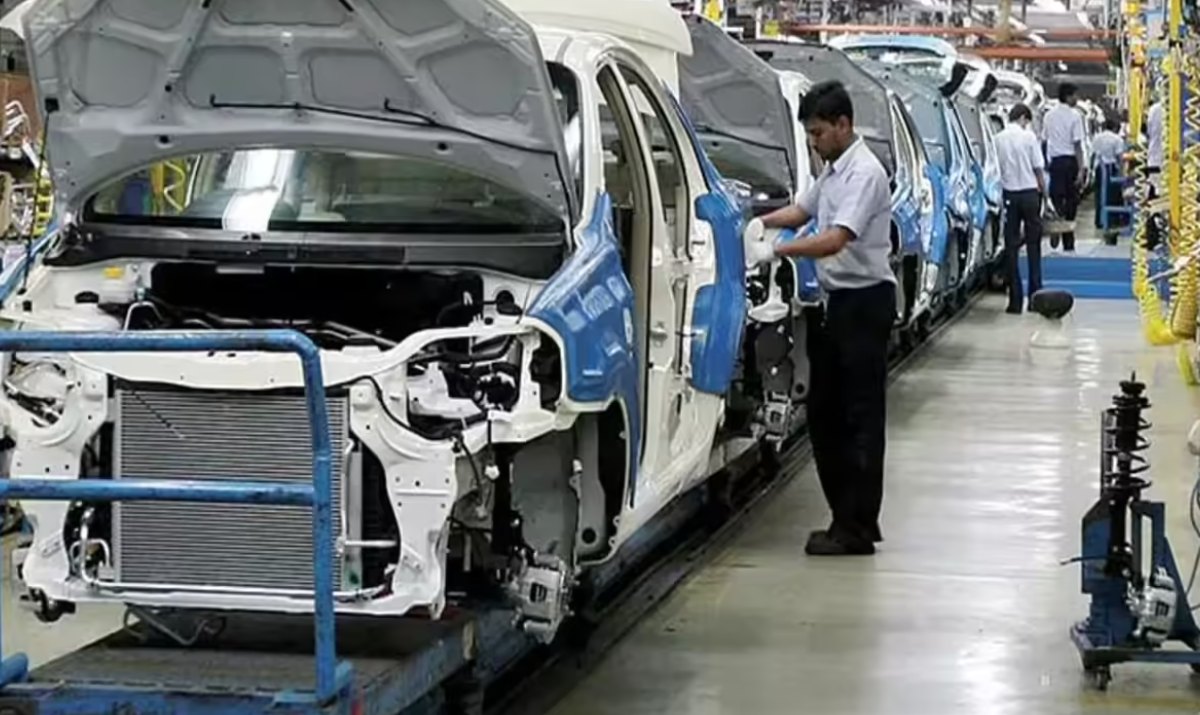
The company is a leading automobile manufacturer in India. The name is confidential and withheld at their request. What is not confidential are the numbers — because the numbers speak louder than any brand name could.
The company had a problem that anyone who has managed a large manufacturing operation will recognise instantly. Their blue-collar workforce — roughly 4,500 permanent and 500 temporary workers — was disengaged. Not in the polite, survey-score sense of the word. Disengaged in ways that showed up on the shop floor every single day.
Workers were not reporting to their work stations. Absenteeism was long and unplanned. There was stubbornness, an unwillingness to work, and a habit of choosing lighter stations to avoid effort. Accountability was absent. Some workers were actively involved in politicizing issues and misleading others. There was no sense of belonging. As the company itself described it, many workers "have no aim" and were "satisfied with what they have."
The attitude challenges were tangled up with deeper issues: no inspiration, no connection to the company, and a shop floor where discipline and IR issues were a recurring theme.
The company acknowledged something important. These challenges were "symptoms of a cultural disconnect and personal skills." Fixing them required a behaviour and mindset change. Not a new policy. Not a stricter attendance system. A change in how people felt about their work and themselves.
The company partnered with the Art of Living Corporate Programs for what became a 24-month engagement — one of the longest and most comprehensive APEX interventions documented.
The design was built to reach every layer of the organisation, top to bottom:
For the top management (~30 people), a 3-day Leadership Program with Reconnects, aimed at enhancing synergy and intuition. For HODs (~20 people), a 3-day Empowering Program with Reconnects, aimed at enhancing leadership and belongingness. For supervisory staff (~800 people), a 16-week Journey of Leadership, aimed at building man-management skills. For permanent blue-collar workers (~4,500 people), a 12-week Journey of Excellence, aimed at creating a culture of belongingness. For temporary blue-collar workers (~500 people), a one-time 2-day program, aimed at building human values.
The blue-collar program — the APEX Journey of Excellence — ran in batches of 25 over 12 weeks. Each batch went through a structured sequence: a pre-program diagnostic on Day 1, a 3-day APEX Harmony program, weekly Reconnect sessions of about 3 hours each, Creative Conversation sessions, an Ayurveda Wellness Module with individual pulse diagnosis, monthly evaluation reports, and a joint celebration at the end. Total interventions per batch: 16. APEX man-hours per batch: 105. Faculty contact hours: 70.
By the time of the impact assessment, 22 programs had been completed: 14 batches of blue-collar workers, 5 batches of supervisors, 1 intervention for union leaders, and 2 programs for HODs. A pool of 12 senior APEX teachers had delivered the work, with 26 reviews and 2 PDCA cycles completed. The program had expanded to cover the company's second plant.
451 lives touched directly. 322 blue-collar workers. 96 team leaders. 10 union leaders. 23 HODs.
The results were measured and reported by the HODs themselves — not by the program facilitators, not by self-assessment. By the people who managed these workers every day.
The participant feedback told the personal story. 86% of blue-collar participants reported improvement in health. 78% reported improvement in stress levels. Among the 33 workers who had been identified as having addiction issues, 80% showed improvement. 64% reported improved relationships with family. 40% reported improved relationships with seniors and colleagues.
But the operational metrics told the story the factory floor cared about most.
Of 93 workers who were under review for poor performance, 78 showed improvement during the training itself. Eight months after the intervention, 48 were sustaining the changes. And 6 had further improved beyond their training-period gains.
Willingness to do assigned tasks — measured on a 0-to-3 scale where 0 meant "will not work on any other station" and 3 meant "open to work on any station" — shifted dramatically. Before the program, 60 workers scored 0. After, that dropped while the number scoring 3 (fully willing) rose from 15 to 23. Workers who had flatly refused to move stations were now volunteering.
Unplanned absenteeism dropped from 53% to 71% improved — a meaningful shift in a manufacturing environment where every absent worker disrupts a production line.
Absence from workstation saw a sharp swing. Before the program, 15 workers scored 0 (absent more than 6 hours). After, that dropped to 6, while those scoring 3 (absent up to 30 minutes or less) jumped from 35 to 71.
Timely reporting improved. Morning meeting attendance improved by 100% to 111% across scoring brackets.
The supervisory staff results, measured separately and reported by HODs, were equally telling.
Self-initiative improved by 50%. Unbiased behaviour improved by 100%. Ability to connect with people improved by 200%. Sensitivity to union dynamics improved by 200%. Ability to guide others improved by 25%. Creating a positive environment improved by 67%. Communication improved by 33%.
Read the third and fourth numbers again. Ability to connect with people: 200% improvement. Sensitivity to union dynamics: 200% improvement. These are supervisors — the layer between management and the shop floor — becoming twice as good at the two things that matter most in a factory with cultural disconnect issues.
The company itself framed the design principle clearly: "To bring about a desired cultural change it is essential that the entire organisation, from top to bottom, undergo transformative programs aimed at creating a shared culture and vision."
That is what happened here. This was not a program aimed at fixing the workers while management watched from a distance. The top management did a leadership program. The HODs did an empowering program. The supervisors did a 16-week journey. The blue-collar workers did a 12-week journey. Even the union leaders went through a dedicated intervention. Everyone was in it.
The key principle stated in the program design was simple: "Continuous Practice & Reinforcing Values Regularly." Not a one-off event. A sustained, layered, reviewed, and measured engagement over 24 months.
The fact that this company's name is confidential is understandable. The fact that its data is not should tell you something about how confident the program team is in what happened.
451 lives touched. Addiction rates dropping. Absenteeism falling. Workers who refused to move stations now volunteering for any assignment. Supervisors doubling their ability to connect with people. And a program so successful it expanded to a second plant before the first engagement was even complete.
The company came in looking to reduce absenteeism and fix discipline. What they got was a cultural shift — from a factory floor defined by "no belongingness, no aim, satisfied with what they have" to one where workers were showing up on time, attending morning meetings, taking on harder assignments, and reporting better health, lower stress, and stronger family relationships.
That is not a training outcome. That is a transformation.
This impact assessment documents the APEX program interventions conducted by the Art of Living Corporate Programs at a leading automobile manufacturing company. The document is classified as confidential and is the property of Art of Living Corporate Programs.
Email This Page
Feedback Form
Birthday
Celebrate your birthday and share the joy of your special day with the less fortunate.
Anniversary
Donate on the occasion of your Anniversary and get blessed on your special day.
In Memory of
Make donations in memory of someone whom you want to pay your respect and cherish memories they have left behind. It is a great way of showing your love and respect.